
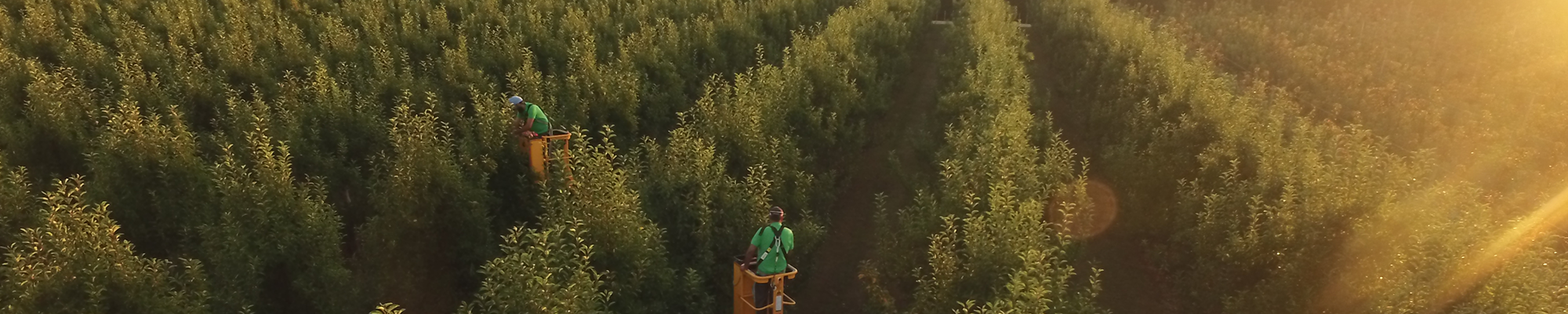
There is a noticeable shift happening across orchards in Australia and New Zealand, and it is not subtle anymore. Conversations that once centred around incremental improvements or marginal productivity gains are now focused on something much more fundamental: how do we build orchards that are resilient in the face of labour shortages, climate variability and rising operational pressure?
Mechanisation is no longer a conversation reserved for the largest operators. It is becoming a defining strategy for growers who want to remain competitive over the next decade.
Labour Is Not Reverting to What It Was
For many orchardists, the most pressing issue is not yield potential or export demand. It is labour certainty.
Industry reporting from Hort Innovation continues to highlight workforce availability and cost pressure as ongoing constraints across the horticulture sector. This is not simply a post pandemic aftershock. It is a structural shift.
Growers are finding that recruitment requires more time, retention requires more investment and experience levels across seasonal teams are increasingly varied. That creates inconsistency in output, particularly during peak harvest.
When output varies, margins tighten.
This is where elevated orchard platforms and mechanised systems begin to change the equation. They do not remove the need for skilled workers, but they do create a more stable working environment. Teams move steadily along rows rather than repeatedly repositioning ladders. The rhythm of the orchard becomes smoother, less reactive and far more predictable.
Hydralada’s orchard lifting platforms were designed around this very principle. Rather than focusing solely on speed, the focus is on creating controlled movement and stable working conditions that reduce fatigue and improve consistency. You can explore these systems here: https://www.hydralada.com/nz/horticulture/lifting-platforms/
An important but often overlooked advantage of single-person platforms is the productivity that comes from individual autonomy. Single person platforms like Hydralada continue to represent one of the most efficient approaches in orchard work because operators are not constrained by the pace or positioning of multiple workers sharing one machine. Each worker moves independently, allowing tasks to be completed at a natural and efficient rhythm rather than waiting for others to reposition or adjust.
The individuality of the Hydralada platform provides greater flexibility across varying tree structures and work types. With intuitive foot controls enabling hands-free operation, the machine effectively becomes an extension of the worker, supporting continuous movement and reducing interruption. The result is not just faster work, but smoother, more consistent productivity throughout the day.
The real return on investment often shows up in subtle ways. Fewer slow afternoons. Fewer days where output drops sharply because fatigue sets in. Fewer instances of fruit damage caused by rushed picking from unstable positions.
Consistency, more than speed, protects profitability.
Safety Is Becoming a Strategic Decision
There is also a quiet but important cultural shift taking place in horticulture. Safety is no longer viewed purely through the lens of compliance. It is becoming a competitive advantage.
Both Safe Work Australia and WorkSafe New Zealand continue to report that agriculture records one of the highest rates of serious workplace injury, with falls from height remaining a persistent contributor.
Ladders are familiar and have been part of orchard life for generations, but familiarity does not eliminate risk. A single serious fall carries consequences that extend well beyond the immediate incident. Lost productivity, increased insurance premiums, investigation time and the impact on team morale can reverberate throughout a season.
Stable elevated work platforms offer something that ladders simply cannot: security and flow. Workers operate from guarded platforms, move along rows in a coordinated manner and spend more time harvesting and less time climbing.
Safety and productivity are often framed as opposing forces. In reality, they reinforce one another.
Climate Variability Is Tightening the Window
Climate patterns across Australasia are becoming less predictable. Data from the Bureau of Meteorology shows a continued rise in extreme heat days across many Australian growing regions. In New Zealand, NIWA has reported increasing intensity in rainfall events and seasonal variability.
What this means for orchardists is simple: the number of ideal working days cannot be taken for granted.
When good weather arrives, the ability to move efficiently matters more than ever. Mechanised orchard systems allow teams to make the most of these windows. Instead of losing momentum to fatigue or inefficient repositioning, they maintain steady output throughout the day.
In an environment where weather is less predictable, flexibility becomes an asset.
Electrification Is Quietly Reshaping Orchard Work
There is also growing interest in electrification across orchard operations. Battery powered pruning tools reduce vibration, lower noise levels and minimise reliance on fuel. They are also easier on operators, which matters in an industry where physical strain accumulates quickly.
Hydralada’s partnership with Pellenc brings these electric systems into orchards that are looking for smarter, more sustainable tools. You can explore Pellenc orchard equipment here: https://www.hydralada.com/nz/viniculture/battery-tools/
This shift toward electric systems aligns with broader sustainability conversations taking place across export markets. Buyers are increasingly asking about environmental credentials, and operational decisions are becoming part of that narrative.
The Strategic Question for 2026
The most forward thinking growers are no longer asking whether mechanisation will become necessary. They are asking how quickly they should integrate it.
January is often the most strategic month in the orchard calendar. It is when last season’s inefficiencies are still fresh in memory. Where did fatigue slow the team? Where did safety risk feel uncomfortable? Where did weather compress the harvest window?
Mechanisation does not remove the craft from horticulture. It supports it. It stabilises it. It protects it from volatility.
In many ways, 2026 feels like a turning point. Not because orchards suddenly need machines, but because the external pressures have intensified enough that standing still carries greater risk than adapting.
The orchards that treat mechanisation as long term infrastructure rather than short term expense are positioning themselves not just for the next harvest, but for the next decade.
References
-
Hort Innovation - Australian Horticulture Statistics and industry workforce reporting
-
Safe Work Australia - Work health and safety statistics for agriculture
-
WorkSafe New Zealand - Agriculture safety data and guidance
-
Bureau of Meteorology - State of the Climate reporting
-
NIWA - Climate summaries and extreme weather analysis