
There was a time when labour planning felt like a scheduling exercise.
Now, it feels like risk management.
Across Australia and New Zealand, orchard and vineyard operators are no longer asking how to optimise labour - they are asking how to operate without relying on it in the same way. Availability fluctuates. Costs continue to rise. Skill levels vary. And timing windows are tightening under increasing climate pressure.
The result is a fundamental shift in thinking.
Mechanisation is no longer a future consideration. It is becoming a present-day operating strategy.
But that shift introduces a very real questions: where do you actually start?
Because mechanisation is not one decision. It is a series of decisions - and getting the first one right matters more than most.
The Real Problem Isn't Labour - it's workflow dependency
When people talk about labour challenges, they often focus on availability.
But the deeper issue is dependecy.
Traditional orchard and vineyard workflows are highly interconnected. One task relies on another. One worker's pace impacts the next. Teams move together, stop together, and slow down together.
And when one part of that chain breaks - everything feels it.
This is where many operations are still exposed.
It is not just that labour is harder to find.
It is that entire workflows are built around the assumption that labour will always be there, in the right numbers, at the right time.
That assumption no longer holds.
Mechanisation works best when it removes bottlenecks first
One of the most common mistakes is approaching mechanisation as a full-system overhaul.
In reality, the most successful operators take a different approach. They start where friction is highest.
Not where tradition says they should. Not where competitors are investing. But where their own operation is slowing down the most.
In many orchards and vineyards, this tends to show up in a few key areas:
- Pruning and training
- Harvest movement and picking flow
- Canopy management (trimming, thinning)
- Material handling and transport between rows
These are not just tasks. They are pressure points. They are where fatigue builds, where inconsistency creeps in, and where timing starts to slip.
Mechanisation, when applied here first, does something powerful: it doesn't just speed things up.
It stabilises the entire system around it.
Why independent workflows are changing the game
A clear trend is emerging across progressive operations.
The move toward independent, machine-assisted workflows.
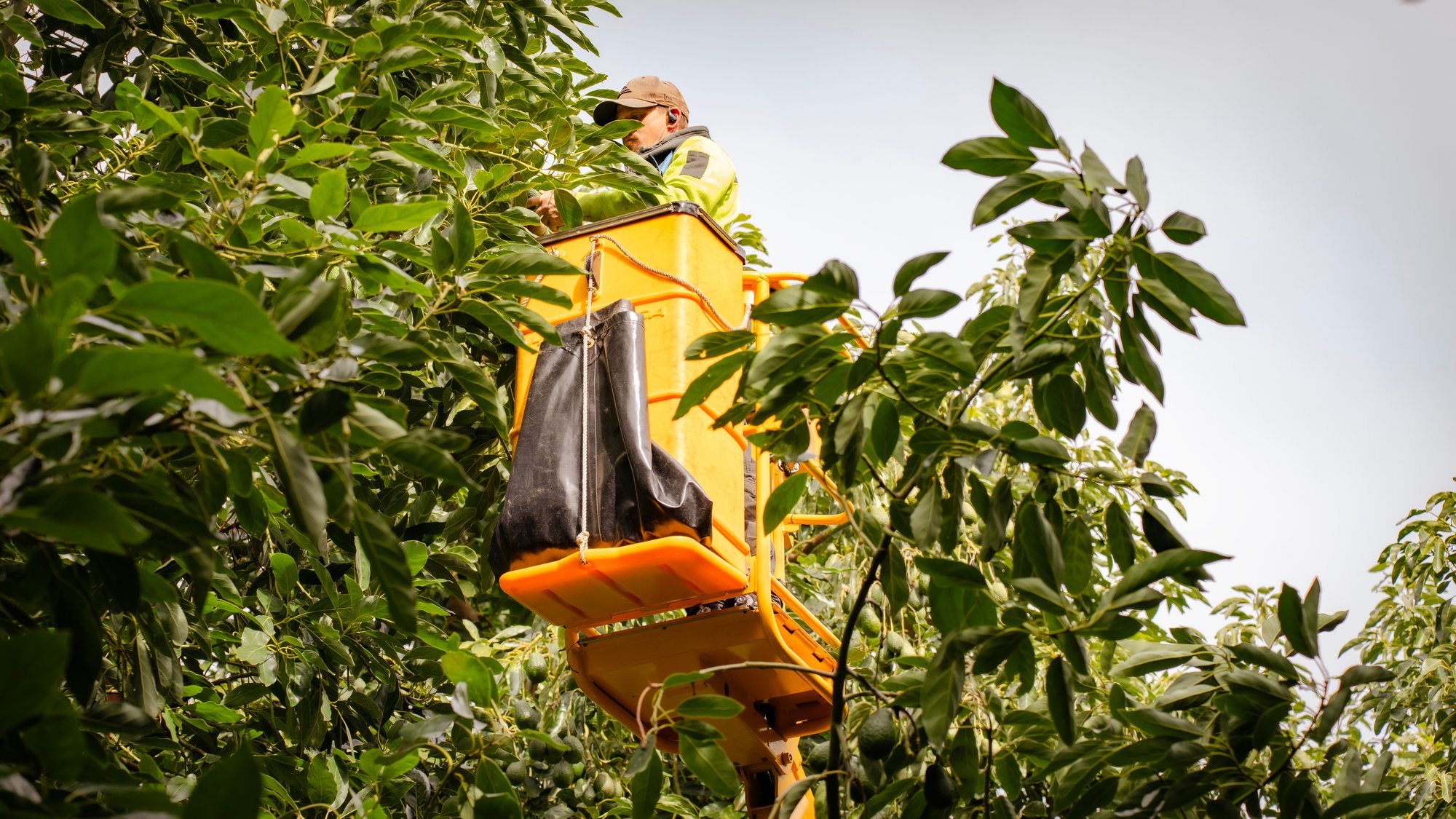
Instead of multiple workers relying on shared equipment or ladder-based processes, operators are increasingly working individually, supported by machinery that adapts to them.
This shift changes more than production. It changes control.
A single operator can:
- Move at their own pace
- Adjust positioning instantly
- Maintain consistent working height
- Reduce physical fatigue across long days
And importantly, they are no longer constrained by the rhythm of a group.
This is where single-operator platforms are proving to be one of the most impactful entry points into mechanisation.
They allow work to continue even when teams are smaller.
They reduce variability between workers. And they create a more fluid, continuous workflow across the orchard or vineyard.
Consistency is the hidden advantage
Speed often gets the attention. But consistency is where the real value sits.
In pruning, consistency drives yield quality.
In harvesting, consistency protects fruit integrity.
In canopy management, consistency influences light distribution and long-term vine or tree health.
Manual processes - especially under fatigue or time pressure - naturally introduce variation. Mechanised workflows reduce that variation. Not by replacing skill, but by supporting it.
When positioning, height, and access are controlled, operators can focus on the quality of the task itself. And over time, that compounds.
Start with one decision - not ten
If you are considering mechanisation, the goal is not to redesign your entire operation overnight. It is to make one high-impact decision.
A useful way to approach it is to ask:
- Where do we lose the most time during the day?
- Where does fatigue slow us down the most?
- Where does inconsistency show up in our output?
- Where are we most exposed if labour is short next season?
The answers to these questions will often point to the same place. That is where mechanisation should begin.
Mechanisation is not about replacing people
There is often hesitation around mechanisation because it is seen as a move away from people. In reality, it is the opposite. It is about making better use of the people you do have.
Giving them tools that allow them to work more effectively, more safely, and with less physical strain. It is about removing the inefficiencies that make already challenging work even harder. And it is about creating an operation that can withstand variability - in labour, in weather, and in timing.
the operators who move first will have the advantage
The shift toward mechanisation is not happening all at once - but it is happening.
Quietly, steadily, and increasingly visibly across leading orchards and vineyards.
Those who start early are not just improving efficiency. They are building resilience into their operations. They are creating workflows that do not rely on perfect conditions to perform well. And they are positioning themselves to respond faster when pressure inevitably comes.
So, where should you start?
Start where the friction is. Start where the pressure is.
Start where a single change could unlock flow across the rest of your operation. Because in today's environment, the question is no longer whether mechanisation makes sense.
It is whether your current workflow can kee up without it.