
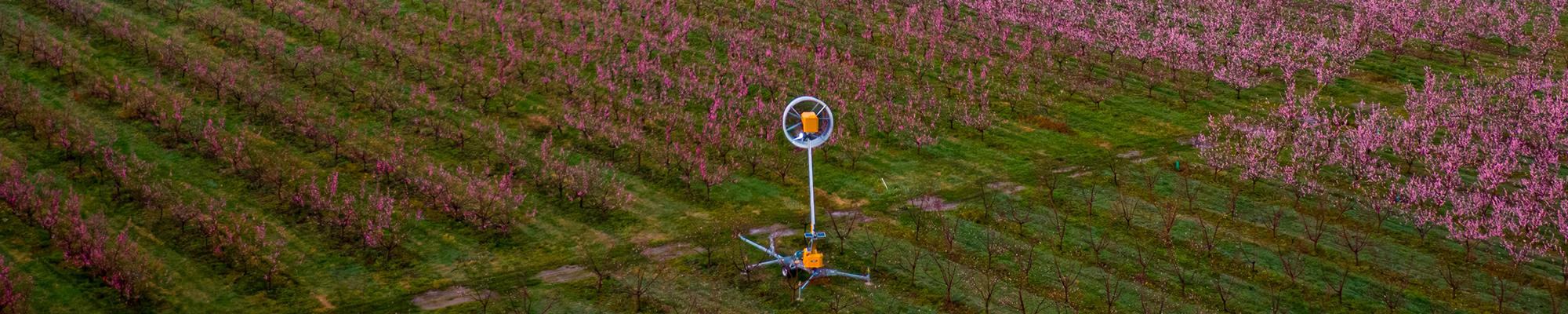
For growers across New Zealand and Australia, frost is one of the few risks that can develop quietly during the night and leave lasting consequences by morning.
A vineyard or orchard can appear healthy and full of potential at sunset, yet a sudden drop in overnight temperatures may threaten delicate buds, blossoms or newly emerging shoots before the day begins. By the time the sun rises, the damage may already be done.
Because of this, frost protection has become one of the most important considerations in orchard and vineyard management. The ability to protect crops during vulnerable growth stages often determines whether a season reaches its full production potential.
Among the many frost protection methods used across horticulture, wind machines continue to stand out as one of the most effective and widely adopted tools.
Their success lies not in complicated technology, but in a simple understanding of how air behaves during frost events.
Understanding Radiation Frost
Most frost events that affect orchards and vineyards are known as radiation frosts. These occur during clear, calm nights when the heat stored in the soil during the day gradually escapes into the atmosphere.
As the ground cools, the air closest to the surface also becomes colder and denser. This colder air settles around plants, while slightly warmer air remains suspended a few metres above the crop canopy.
The result is something known as a temperature inversion.
In this situation, the coldest air sits exactly where it can do the most damage, directly around the plant tissue that growers are trying to protect.
The warmer air above the orchard represents an opportunity.
The Role of Air Mixing
Wind machines are designed to take advantage of this natural layering of air.
A large fan mounted on a tower pulls the warmer air from above and pushes it down into the colder air near the crop canopy. This mixing of air layers raises the temperature within the orchard environment and reduces the likelihood that frost will form.
The temperature increase created by air mixing may only be one or two degrees, but in many situations that small difference is enough to prevent frost damage.
For crops such as apples, grapes and kiwifruit, the margin between safe temperatures and damaging frost conditions can be surprisingly narrow. Even a slight increase in temperature can protect buds or blossoms during the most sensitive growth stages.
Protecting Larger Orchard Areas
Another reason wind machines are widely used is their ability to protect relatively large areas from a single installation point.
Depending on orchard layout, topography and local conditions, a frost fan can circulate air across several hectares of crop. This makes them particularly well suited to large orchard blocks and vineyards where consistent protection is needed.
Because airflow patterns are influenced by landscape features such as slopes, tree spacing and block layout, careful placement of wind machines is important to ensure effective coverage.
Modern frost fan systems, including those engineered by TBX, are designed to maximise airflow distribution and maintain consistent air movement throughout the protected zone.
By moving air across the crop canopy, these systems help reduce the risk that cold pockets will settle within vulnerable areas of the orchard.
Reliability During Critical Conditions
Frost protection equipment must perform reliably when it is needed most.
Unlike tractors or harvest machinery, frost protection systems may remain idle for extended periods before suddenly becoming critical during a cold night. When temperatures begin to fall rapidly, growers rely on these systems to start quickly and operate continuously until the risk has passed.
Reliability therefore becomes one of the most important considerations when selecting frost protection equipment.
Durable engineering, dependable start-up performance and consistent airflow all contribute to the effectiveness of wind machines in real-world orchard conditions.
For growers, the goal is simple: when frost conditions develop, protection must be available immediately.
A Key Part of Modern Orchard Management
While wind machines are extremely effective during radiation frost events, they are usually used as part of a broader frost management strategy.
Growers combine active protection with good orchard design practices, including careful site selection, canopy management and monitoring of local temperature conditions.
In many regions, weather monitoring systems now provide growers with real-time data about temperature changes within orchard blocks. These tools allow growers to activate frost protection systems before temperatures reach damaging levels.
By combining monitoring technology with reliable frost protection equipment, orchard managers are able to reduce risk and protect crops more effectively.
Increasing Importance as Crop Values Rise
The horticulture industry has changed significantly over the past few decades. As crop values increase and global demand for high-quality fruit continues to grow, the financial stakes associated with frost damage have also risen.
A frost event that damages blossoms or young shoots can significantly reduce the productivity of an orchard for the entire season. For some growers, the difference between a protected crop and a damaged one may represent the difference between profit and loss.
Because of this, frost protection is increasingly viewed as an essential investment in orchard productivity.
Wind machines remain one of the most practical and effective tools available for managing frost risk.
Looking Ahead
As climate variability continues to influence weather patterns across horticultural regions, the importance of reliable frost protection is unlikely to diminish.
Growers will continue to adapt their strategies, combining traditional orchard knowledge with modern technology to protect crops during vulnerable stages of growth.
Wind machines, including frost fan systems such as those developed by TBX, will remain a key part of that strategy because they offer something growers value above all else during uncertain conditions: dependable protection when temperatures begin to fall.
For many orchards and vineyards, that reliability can make all the difference between a damaged crop and a successful season.
References
National Institute of Water and Atmospheric Research (NIWA)
https://niwa.co.nz
Hort Innovation Frost Management Resources
https://www.horticulture.com.au
Australian Bureau of Agricultural and Resource Economics and Sciences (ABARES)
https://www.agriculture.gov.au/abares