
When it comes to buying ladders, most growers focus on the upfront price. It’s a simple comparison, and on the surface, ladders look like one of the more affordable tools in an orchard or vineyard.
But once you look beyond that initial cost, the picture becomes a lot more complex.
Across New Zealand and Australia, ladder pricing can vary quite a bit. Entry-level ladders can sit in the low hundreds, particularly for smaller or general-purpose models. Tripod orchard ladders, which are purpose-built for picking and pruning, typically fall into a mid-range price bracket, reflecting their design and stability. At the higher end, larger ladders with stronger construction or premium materials can push well beyond that.
Brands like Gorilla and Indalex often cover the entry to mid-range space, while AIM, Allweld, Transtak and Allite are more commonly chosen by growers looking for ladders designed specifically for orchard conditions. Hasegawa sits at the premium end, with a focus on build quality and engineering.
What drives these price differences is relatively straightforward. Height plays a big role, as taller ladders require more material and structural strength. Load ratings, which are important for safety, also influence cost. Design matters too, particularly when ladders are built specifically for orchard use rather than adapted from general-purpose models.
But the more important consideration is what sits behind the price.
Most operations don’t rely on a single ladder. They rely on multiple ladders, often one per worker. That means the total investment adds up quickly, especially as operations scale. Over time, ladders also need to be replaced, maintained, and moved constantly throughout the orchard.
Then there’s the human side of the equation.
Ladder-based work is physically demanding. Workers are climbing, descending, carrying tools or fruit, and repositioning themselves throughout the day. Even when everything is done safely and correctly, it requires a consistent level of physical effort that can be difficult to sustain over long periods.
This is where ladders can start to become more expensive than they first appear.
It’s not that they’re a bad investment. It’s that they don’t scale particularly well as a system. As the size of the operation increases, so does the reliance on labour, movement, and physical effort.
That’s the point where some growers begin to look at alternatives.
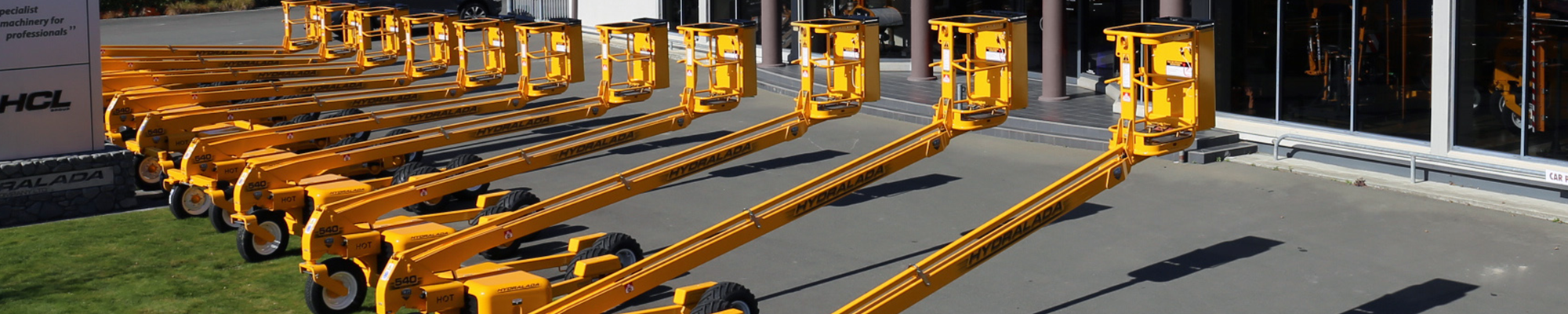
Instead of focusing purely on ladder cost, they start thinking about labour efficiency, safety, consistency, and how work flows through the orchard. This is where solutions like Hydralada start to enter the conversation.
With Hydralada, the comparison isn’t ladder versus ladder anymore. It’s ladder versus a different way of working. Their systems are designed to reduce labour dependency in picking and pruning by allowing operators to work continuously at height, rather than repeatedly climbing and repositioning.
Machines like the hands-free elevated work platforms shift the workflow entirely. Instead of multiple workers climbing independently, the work becomes more continuous and less physically demanding.
There’s no denying that the upfront cost is higher. And for smaller operations, ladders will often remain the right choice.
But for growers who are thinking long-term, the real question tends to shift from “what does it cost today?” to “what does this approach cost over time?” The return on the investment is very fast, in some cases only months.