
Pruning is one of those jobs that looks straightforward from the outside, but anyone who has spent time doing it properly knows it’s anything but. It is a real skill that requires concentration, consistency, and a steady rhythm that can be maintained hour after hour. It’s also one of the most physically demanding tasks in both orchards and vineyards, even if that isn’t always obvious at first glance.
Across New Zealand and Australia, pruning is still largely carried out using hand tools. While mechanisation is becoming more common, especially in larger operations, the majority of detailed pruning work still relies on manual equipment. That’s because pruning isn’t just about removing wood. It’s about making carefully considered decisions. Every cut affects the shape of the plant, the flow of energy, and ultimately the quality and quantity of what will be harvested later in the season.
At the centre of this work are hand secateurs.
The most widely used type is the bypass pruner. It’s the tool most growers will instinctively reach for, and for good reason. The design allows one curved blade to pass cleanly by another, creating a precise cut that is ideal for live wood. This minimises damage to the plant reducing crush, and supports better healing, which is critical for long-term plant health. Brands like Lowe, Felco, Bahco and ARS are commonly used across both orchards and vineyards because they hold their edge, feel balanced in the hand, and are built to withstand repeated use over long periods. Some high end secateurs include a role handle which improves comfort, subsequenty reducing over use syndrome (OUS)
Anvil pruners are also part of the mix, although they tend to be used more selectively. Instead of two blades passing each other, a single blade cuts down onto a flat surface and requires less effort to make the cut. This makes them better suited to hard wood, as well as where precision matters less and cutting force matters more. For ssome cane pruning, they can be a bit harsh, which is why most growers reserve them for specific situations rather than everyday use.
As branches get thicker, loppers come into play. These are essentially extended pruners, with longer handles that provide more leverage. They allow growers to cut through heavier wood without needing to switch to a saw straight away. However, that added leverage also comes with added effort. Using loppers repeatedly throughout the day can be physically taxing, particularly on the shoulders and upper body. There are some advantages when reach is required, in taller trees, or overhead canopy in kiwifruit vines.
For anything beyond that, hand saws are used. These are essential for removing larger limbs or making structural cuts. They offer a clean finish, but they introduce a different kind of strain, especially when used above shoulder height or in awkward positions within the canopy. There is more space required to use a saw so arent real ideal for tight spaces.
When you step back and look at all of these tools together, they form a complete system. Each one serves a purpose, and in combination, they allow growers to carry out the full range of pruning tasks required across a season.
But what often gets overlooked is what it actually feels like to use them, day after day.
Pruning is repetitive by nature. It involves the same motion over and over again, often for hours at a time. Grip, cut, release. Grip, cut, release. Even with well-designed tools, that repetition builds quickly. The first hour feels manageable. By midday, the strain starts to show. By the end of the day, hands can feel tight, wrists can feel stiff, and forearms can feel fatigued.
Over the course of a pruning season, that physical load adds up significantly. Repetitive strain injuries are not uncommon, particularly in operations where pruning is concentrated into a short window. Small aches can develop into more persistent issues, and even when injuries don’t occur, fatigue can start to affect performance. All of this needs to be considered if pruning is your main occupation.
That has a flow-on effect.
As workers tire, the consistency of pruning can begin to vary and productivity falls away. Cuts may become less precise. Decision-making can slow down. In some cases, productivity drops simply because the body can’t maintain the same pace throughout the day.
For many growers, this is simply accepted as part of the job. It’s the way pruning has always been done.
But increasingly, it’s becoming something worth questioning.
Because while hand tools are effective, they rely on a way of working that is heavily dependent on continuous manual effort. And as operations grow, that reliance becomes harder to sustain.
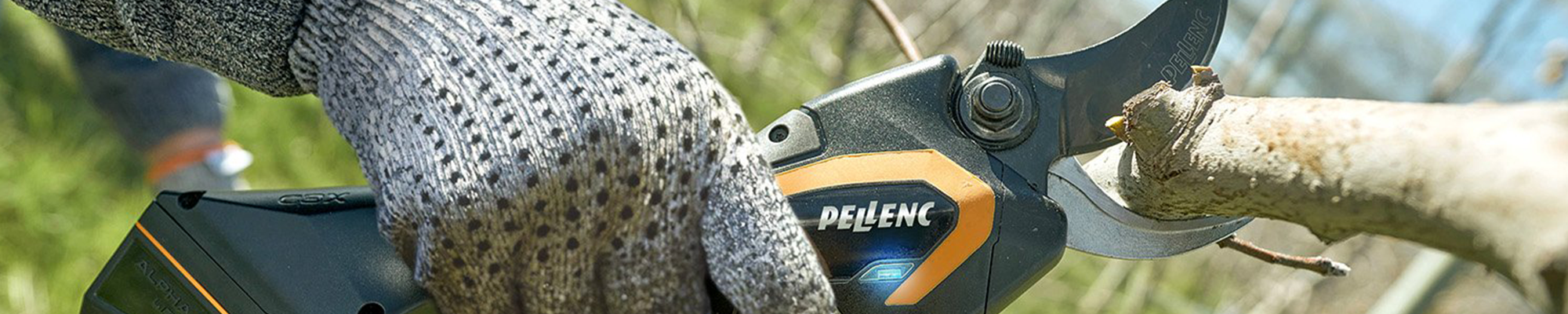
This is where solutions from Hydralada Company begin to come into the conversation. Not as a replacement for the pruner itself, but as a way to reduce the physical strain that surrounds the work. By allowing operators to work more comfortably at height using orchard platforms for pruning and picking, and integrating mechanised pruning tools, the overall workflow starts to shift.
The skill of pruning remains. The decision-making remains. But the physical toll reduces significanlty.
And for many growers, that’s where the real value lies.