
When you walk through an orchard anywhere across New Zealand or Australia, you’ll almost always see ladders. They’ve been part of the industry for decades, and for many growers, they’re still seen as a simple, reliable way to get the job done.
But the idea that “a ladder is a ladder” doesn’t really hold up once you look a little closer.
There are multiple types of ladders used across horticulture and each one plays a slightly different role depending on the task, the terrain, and the structure of the crop. Understanding those differences is important, because the type of ladder being used often shapes how the work itself gets done.
The most common is the aluminium lightweight tripod orchard ladder. This is the one most growers will recognise straight away. The three-legged design allows the ladder to sit more securely on uneven ground, and the single rear leg can be positioned closer to the trunk or canopy. That makes it easier to work within the tree, whether you’re picking fruit or carrying out pruning. The legs have a spike to engage in the ground safely. Brands like Allied, Allite, Transtak, AIM, Indalex and Allweld have built strong reputations in this space, largely because the design itself has proven to work well in real orchard conditions.
Alongside tripod ladders, platform ladders are also used, particularly in situations where stability underfoot matters more than mobility. These ladders offer a flat standing surface at the top, which can reduce fatigue over shorter periods. You’ll often see them used in packhouses or for lighter maintenance work. However, they’re not specifically designed for uneven terrain, and moving them frequently through an orchard can slow things down.
Standard step ladders still have a place too, although they tend to sit more on the maintenance side of operations rather than picking or pruning. They’re useful for general tasks, repairs, or irrigation work, but they don’t offer the same access into the canopy and can be unstable on soft or uneven ground.
Extension ladders are another option, usually reserved for reaching higher areas or working on infrastructure. They can be adjusted to different heights, but they rely on being leaned against a stable surface, which makes them less practical for repetitive orchard tasks like picking.
Then there are the smaller orchard stools and low platforms. These are often used for lower canopy work or in nursery environments where full ladder height isn’t required. They’re quick to move and very stable, but their limited reach means they only suit specific situations.
Finally, some growers use adjustable or specialist ladders designed for sloped terrain. These can provide better stability in challenging conditions, but they tend to be heavier and slower to set up, which limits their use across larger operations.
When you step back and look at all of these options, the key thing they have in common is not their design, but the way they are used.
Every ladder-based workflow follows the same pattern. The worker climbs up, completes a section of work, climbs down, moves the ladder, and repeats the process. Over the course of a day, that cycle is repeated hundreds of times, and can be quite tiring and in some cases inefficient
For many operations, that system still works well enough. But as orchards grow, and as labour becomes harder to find and retain, that constant climb-move-repeat cycle starts to feel less efficient.
This is where the conversation begins to shift.
Some growers are starting to look beyond ladder types and ask a different question entirely. Instead of asking which ladder works best, they’re asking whether the ladder-based way of working still makes sense for their operation.
That’s where solutions like Hydralada come into the picture.
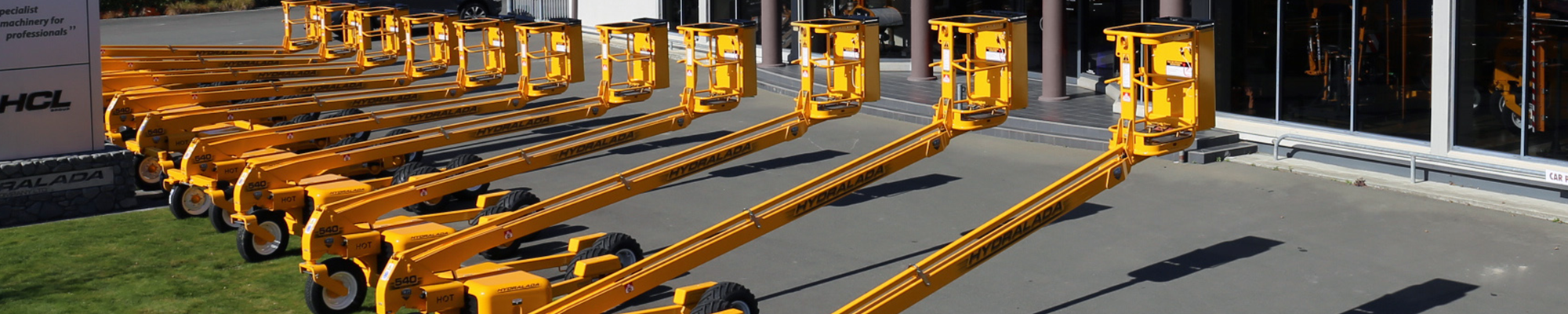
Rather than focusing on the ladder itself, Hydralada’s approach is to change how the work is done. Their orchard platforms for picking and pruning allow operators to work continuously at height, reducing the need for constant climbing and repositioning. For pruning specifically, their hydraulic pruning tools and elevated systems are designed to make repetitive canopy work more consistent and less physically demanding. In high density orchards , their canopy management solutions extend this even further into mechanised workflows.
It’s not about replacing one ladder with another. It’s about recognising when the ladder-based system itself is no longer the most effective way to work.